Hidden costs in Hackney removals and how to avoid them
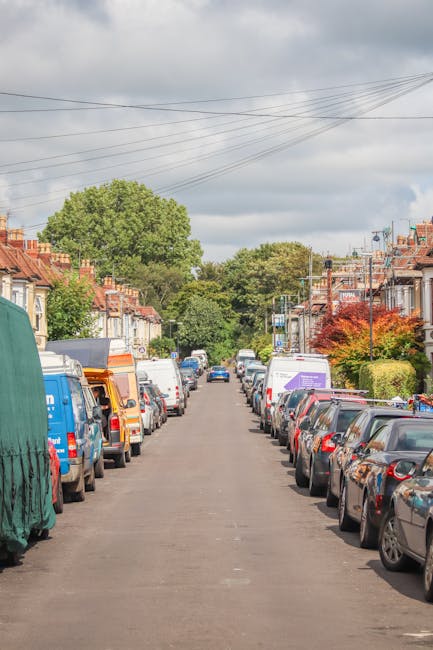
Moving house or office in Hackney can feel simple at the quote stage and then suddenly, well, not so simple. A price looks tidy on paper, but once you start dealing with parking, stairs, packing materials, access issues, waiting time, and storage, the final bill can creep up in a way that catches people off guard. This guide explains the hidden costs in Hackney removals and how to avoid them, so you can budget properly, ask the right questions, and make calmer decisions from the start.
Whether you are moving from a compact flat, a Victorian terrace, or a small office near a busy street, the same problem shows up again and again: the cheapest quote is rarely the cheapest move. Let's unpack where those extra charges come from, what to look for, and how to keep control without making your move more stressful than it already is.
Why hidden costs in Hackney removals and how to avoid them matters
Hackney moves often involve tighter streets, limited loading space, controlled parking zones, top-floor flats, and buildings where access is a little awkward. That combination can turn a straightforward removal into a series of small add-ons. A short delay, a second person needed to carry items, a longer van wait, or an extra stop for storage can all influence the final price.
Hidden costs matter because they do two things at once: they strain your budget and they reduce trust. Nobody enjoys hearing, after the fact, that a service was "quoted subject to access" or that a stair fee applies because the lift was unavailable. To be fair, some extras are genuine operational costs. But if they are not explained clearly before moving day, they feel like a trap.
There is also a timing issue. In Hackney, many moves happen at busy times of day, around school runs, commuting hours, or shared building access windows. That can mean waiting time, rescheduling, or rushed loading. If those risks are not built into your plan, you may end up paying more simply because the move took longer than expected.
Key takeaway: the best way to avoid surprise removal charges is to treat the quote like a working estimate, not a promise, until every likely cost has been checked, named, and confirmed in writing.
How hidden costs in Hackney removals and how to avoid them works
Most hidden costs appear when a moving company prices from incomplete information. A brief phone call might cover volume, but not the awkward hallway turn, the lack of a lift, the long walk from front door to van, or the fact that the nearest parking is down the road. The quote looks fine, then the job gets harder on the day.
Here are the most common ways extra charges show up:
- Access complexity: stairs, narrow entrances, no lift, long carries, or restricted entry times.
- Parking and waiting: parking permits, loading restrictions, or time spent waiting for access.
- Packing and materials: boxes, tape, wardrobe covers, bubble wrap, and fragile-item protection.
- Large or awkward items: pianos, antiques, oversized sofas, disassembled furniture, or office equipment.
- Storage needs: if completion dates do not line up, temporary storage may be needed.
- Timing changes: delays, key handover problems, or last-minute booking changes.
- Insurance or liability extras: certain items may need extra protection or specialist handling.
In a real move, these issues are rarely dramatic. They are usually small things stacking up. A fiver here, half an hour there, another charge because the mattress needed extra wrapping. Not a disaster, but enough to sting if you were not expecting it.
That is why it helps to ask for a detailed, itemised quotation and not just a headline price. If a company offers clear pricing and quotes, you are in a better position to compare like with like. And if the move is local, a service such as local removals may suit a shorter, more flexible job better than a larger all-day package.
Key benefits and practical advantages
Managing hidden costs properly is not only about saving money, although that is obviously nice. It also improves the move itself.
- More accurate budgeting: you know the likely total before moving day.
- Less stress: fewer awkward surprises mean fewer decisions made under pressure.
- Better service matching: you can choose a package that fits the job, not just the cheapest headline rate.
- Faster moving day: planning access and packing properly can reduce delays.
- Lower risk of damage: good packing and protection reduce claims and costly mishaps.
- Smarter use of storage: temporary storage can solve timing gaps without chaos.
There is also a quieter benefit: confidence. When you know where the price comes from, it becomes much easier to say yes to the right option and no to the wrong one. That sounds simple, but in the middle of a move it matters a lot.
For people moving bulky furniture or delicate household items, services like furniture storage or secure storage can sometimes be cheaper than scrambling for emergency arrangements on the day. And if you only need a lighter-touch solution, a man and van option may be enough without paying for capacity you do not need.
Who this is for and when it makes sense
This advice is useful for almost anyone moving in Hackney, but some people feel the hidden-cost effect more sharply than others.
- Flat movers: especially if you are on an upper floor or in a building with limited access.
- Home movers: families and couples with larger volumes, mixed furniture, and packed schedules.
- Students: often moving with smaller budgets and short notice.
- Office managers: where downtime, IT handling, and timing are critical.
- People between properties: if completion dates do not line up neatly.
- Anyone moving on a tight margin: because even modest extras can upset the whole plan.
If you are moving from a flat, for example, the difference between a quick load and a difficult load can be huge. A narrow stairwell, a busy shared entrance, or no parking nearby can add real time. In those cases, a service like flat removals is often a better fit than a generic quote based only on the number of rooms.
Office moves have their own version of the same issue. A desk move looks inexpensive until someone remembers the filing cabinets, cable management, IT equipment, and the fact the lift is out for maintenance. If that sounds familiar, office removals and even office storage can help you plan the move around work disruption instead of reacting to it.
Step-by-step guidance
1. List everything that will move
Start with a room-by-room inventory. Do not just count rooms; note the big pieces, the awkward items, and anything fragile or valuable. A sofa is one thing. A sofa that needs partial disassembly and carries from a third-floor landing is another thing entirely.
2. Check access properly
Measure stair widths if needed. Look at lift availability. Think about parking distance from the door. If a van cannot stop close by, the carrying time matters. This is one of the biggest reasons moves cost more than expected, and it is easy to miss when you are focused on bigger things.
3. Ask exactly what is included
Ask whether the quote includes labour, mileage, fuel, waiting time, dismantling, reassembly, packing materials, and VAT if applicable. If something is excluded, ask how it is charged. A quote that looks lower may simply leave out things others already included.
4. Decide what you will pack yourself
Packing services can save time, but they cost money. There is no right answer for everyone. If your move includes delicate crockery, artwork, or a lot of mixed loose items, a professional packing services option may actually prevent expensive breakages and wasted time.
5. Build in a buffer for timing
In Hackney, same-day key handovers and tight schedules can be risky. If there is a gap between moving out and moving in, temporary storage may be more sensible than paying for everyone to stand around waiting. Depending on the situation, short-term storage or removals and storage can keep the move calm and controlled.
6. Confirm insurance and responsibility
Do not assume every item is covered in the way you expect. Ask what happens if something gets damaged, what the claims process looks like, and whether extra cover is available for specialist goods. A clear insurance and safety explanation is a good sign that the company takes the job seriously.
7. Put the final agreement in writing
Once the details are agreed, keep them in writing. Even a short email summary can help if there is confusion later. Honestly, this saves arguments. And nobody wants to be discussing stair fees while standing in a hallway with a kettle box in one hand.
Expert tips for better results
Here is the stuff people often learn the hard way. You do not have to.
- Be honest about volume: underestimating how much you own usually backfires. It is better to overshare than to be "approximately" wrong.
- Photograph access points: pictures of staircases, parking space, building entry, and bulky items can help a mover price more accurately.
- Separate essentials: keep documents, chargers, medicines, and a basic overnight bag with you.
- Label awkward items: "fragile," "this side up," and "reassemble first" really do help.
- Ask about time windows: if your building has strict access rules, mention them early.
- Consider a smaller vehicle if access is tight: sometimes a more nimble service is cheaper overall than a larger van that cannot park close enough.
A small but useful point: if you are moving a student flat, compact studio, or a few key items, it can be worth comparing small removals with a broader full-house package. The difference is often in the charge structure, not just the size of the van.
And for student moves in particular, short storage or flexible collection can stop you paying for multiple taxi-like trips across London when one organised plan would do the job better.
Common mistakes to avoid
A lot of hidden costs come from rushed decisions. The good news? Most are avoidable.
- Choosing a quote only by the headline price. Lowest number on the page is not always lowest total cost.
- Forgetting parking or access issues. Hackney streets can make "quick and easy" less quick than hoped.
- Leaving packing to the last minute. That often leads to damaged items and more labour time.
- Ignoring storage gaps. One missing completion date can throw out the whole plan.
- Not checking what happens with delays. Waiting charges can be painful if you assumed the crew would simply sit there.
- Failing to mention special items. If there is a piano, an antique mirror, or an unusually heavy wardrobe, say so early.
One of the more common mistakes, truth be told, is believing that a "local" move must be simple. In Hackney, local does not always mean easy. A mile can still involve awkward parking, a late lift, and four flights of stairs. That is just life in London sometimes.
Tools, resources and recommendations
You do not need fancy tools to avoid surprise charges. What you need is a sensible process.
- A written inventory: even a simple spreadsheet or notes app list helps.
- Phone photos: especially useful for entrances, stairs, parking spots, and large furniture.
- A tape measure: worth having for doorways, beds, wardrobes, and sofas.
- Labels and markers: keep the move organised from the first box to the last.
- Removal quote comparison: compare what is included, not just what it costs.
If you are moving items that you do not need immediately, then storage can be the cleaner choice. For longer gaps, long-term storage can help avoid repeated moving costs. For flexible home setups, self storage or household storage may be more practical than cramming everything into the next property at once.
For people with mixed home and storage needs, it can also be worth looking at removals as the core service, then pairing it with the right storage option rather than forcing everything into a single rushed delivery.
Law, compliance, standards, or best practice
This topic touches on money, property handling, and safety, so best practice matters. While every mover operates differently, a reliable provider should be transparent about terms, damage handling, and payment conditions. You should expect clear information before booking, not vague assurances afterwards.
In the UK, good practice usually means:
- clear written quotes and terms
- honest disclosure of exclusions and surcharges
- reasonable handling of access and safety risks
- appropriate care for belongings during loading, transit, and unloading
- plain-language information about insurance and claims processes
Safety also matters on the day itself. If a company follows a sensible health and safety policy, that should show up in how they handle lifts, heavy lifting, packing, and site access. You do not need legal jargon. You need a team that does the job properly and does not wing it.
For payment, use services and methods you are comfortable with, and check the company's payment and security approach before handing over details. If something is unclear, ask. Straight question, straight answer. That is how it should be.
Options, methods, or comparison table
Different moving setups create different cost risks. This comparison can help you choose the right approach.
| Option | Best for | Potential hidden costs | How to reduce them |
|---|---|---|---|
| Full removals | Larger home moves, busy schedules, multiple rooms | Packing, labour, access delays, disassembly | Inventory everything, confirm exclusions, book early |
| Man and van | Small loads, local trips, lighter moves | Extra journeys, waiting time, underestimating volume | Be precise about item count and access conditions |
| Packing services | Fragile or time-sensitive moves | Materials, labour, specialist wrapping | Ask for itemised pack costs and only pack what is needed |
| Removals and storage | Gap between move-out and move-in | Storage duration, collection and return handling | Choose the shortest practical storage period |
| Self storage | Flexible personal or household overflow | Ongoing rent, access trips, transport back and forth | Use only for items you will not need repeatedly |
There is no single winner here. The cheapest-looking option can still become the most expensive once time, transport, and repeated handling are counted. That is the bit people miss.
Case study or real-world example
Consider a couple moving from a third-floor Hackney flat into a new home nearby. At first glance, it sounds straightforward. Two bedrooms, a sofa, a bed, a dining table, and a few boxes. They get one quote that looks attractively low and another that seems a bit higher but includes packing help, better access questions, and a storage option if the new place is not ready.
On moving day, the cheaper quote starts to wobble. Parking is further away than expected. The lift is out of service. A large wardrobe needs dismantling. The crew has to wait while keys are sorted. Suddenly the final cost is no longer cheap, just delayed and awkward.
The second option, while pricier at first, would have made more sense because the quote had already allowed for the building layout, the furniture, and the likely timing issue. They could have used house removals with a little storage support, or even a more tailored local setup. Instead, they paid for uncertainty. Not ideal. Not the end of the world either, but definitely a lesson.
That is the heart of it, really: hidden costs are often just unplanned realities dressed up as surprises.
Practical checklist
Use this checklist before you book any move in Hackney:
- Have you listed every room and large item?
- Have you checked stairs, lifts, and parking distance?
- Do you know whether packing materials are included?
- Have you asked about waiting time and delay charges?
- Do you know whether dismantling and reassembly cost extra?
- Have you confirmed insurance and liability terms?
- Do you need short-term or long-term storage?
- Have you compared at least two quotes on the same basis?
- Have you asked what happens if moving times change?
- Do you have your move date, access times, and key handover details in writing?
If you can answer yes to most of these, you are already ahead of the game. Seriously, a bit of organisation goes a long way here.
Get a free quote today and see how much you can save.
Conclusion
Hidden costs in Hackney removals and how to avoid them is really about one thing: clarity. The more you know about your access, your inventory, your timing, and your storage needs, the less likely you are to be caught out by an apparently cheap quote that grows teeth later on.
Take your time with the details. Ask awkward questions. Compare what is actually included. If you need storage, use it deliberately rather than as an emergency patch. And if you only need a smaller or more flexible move, choose the service that fits the job instead of buying too much or too little.
Do that, and the move becomes a lot more manageable. Not perfect, because moving rarely is, but manageable. And sometimes that is exactly what you need.
Frequently Asked Questions
What are the most common hidden costs in Hackney removals?
The biggest ones are usually parking, waiting time, access difficulty, packing materials, dismantling and reassembly, and storage if dates do not line up.
How do I avoid surprise charges on moving day?
Give the mover a full inventory, explain access clearly, ask what is included, and get the agreement in writing. Photos help too.
Are cheap removal quotes always a bad sign?
Not always, but a quote that is much lower than the others may be leaving out important items. Check what is excluded before you decide.
Do Hackney flats cost more to move from than houses?
Often they can, especially if there are stairs, no lift, or limited parking. The move itself may be short, but access can make it more complex.
Is packing service worth the extra money?
It can be, especially for fragile items, busy households, or time-sensitive moves. It may also reduce breakage and delays.
When should I use storage during a move?
Storage makes sense when move-out and move-in dates do not match, or when you want to avoid cluttering the new property straight away.
What should be included in a removal quote?
Ideally it should cover labour, vehicle use, mileage, packing materials if applicable, access assumptions, and any possible extra charges.
How can I tell if a mover is being transparent?
They answer questions clearly, explain exclusions, ask about access in detail, and give you written terms rather than vague promises.
Can office removals have hidden costs too?
Yes, especially if there is IT equipment, after-hours work, building access rules, or the need for temporary office storage.
What is the best way to compare removal companies?
Compare like for like. Check what each quote includes, not just the final number. A slightly higher quote can be better value if it is more complete.
Should I mention awkward items like wardrobes and mirrors in advance?
Definitely. Awkward or fragile items often need extra time, protection, or dismantling, and that affects the quote.
Is man and van cheaper than full removals?
It can be for smaller loads, but if the job is bigger than expected, repeated trips or extra labour may make it less economical overall.